
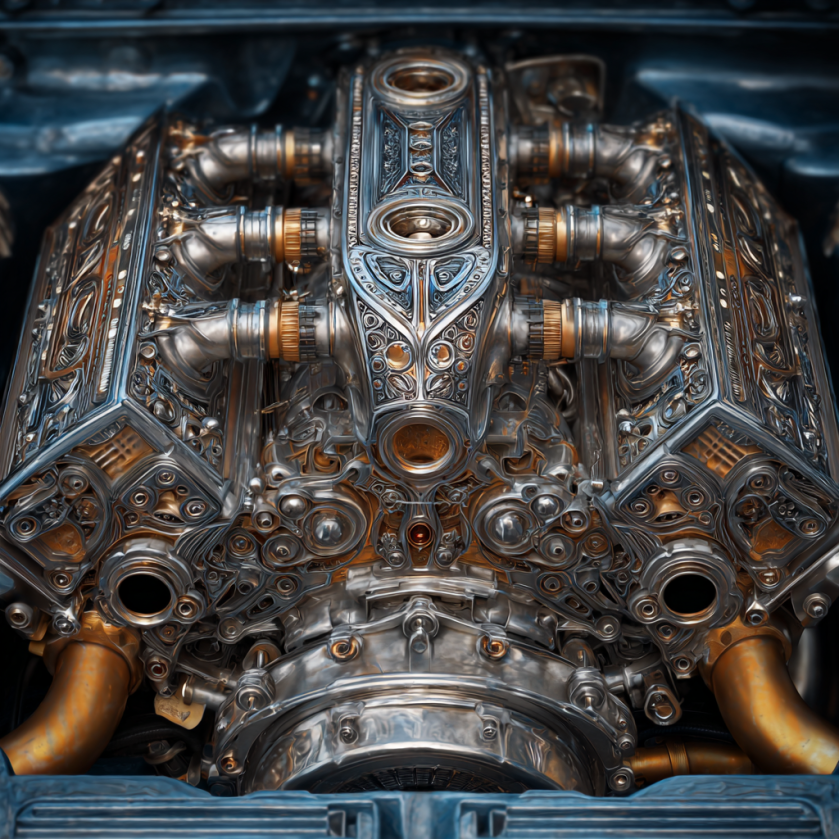
Few sounds in the American cultural imagination are as visceral and immediately recognizable as the low, ground-shaking idle of a high-displacement V8 muscle car engine. It is not merely noise — it is a statement of intent, a mechanical heartbeat that connects driver to machine in a way no other vehicle category has ever replicated. The muscle car era, stretching roughly from the mid-1960s through the early 1970s, produced some of the most celebrated internal combustion engines in automotive history, and their legacy continues to influence everything from modern performance street cars to NHRA drag racing.
For enthusiasts like Mike Savage of New Canaan — CEO of 1-800Accountant and founder of the Savage-Rivera Foundation — the muscle car isn’t just a hobby; it’s a lens through which American ingenuity, competitive drive, and craftsmanship are best understood. In this post, we go deep under the hood to examine the engines that made these legends possible.
What Made an Engine a “Muscle Car” Engine?
Before diving into specific powerplants, it’s worth establishing what separated a muscle car engine from any other high-performance motor of the era. The defining characteristic was almost always displacement — cubic inches. The philosophy was elegantly simple: take a large, heavy engine block originally designed for trucks or luxury cars, shoehorn it into a mid-size platform, and tune it aggressively enough to produce maximum torque and horsepower without exotic engineering.
This approach stood in contrast to the high-revving, small-displacement engines favored in European sports cars. Where Ferrari chased power through precision and RPM, Detroit chased it through cubic inches and compression ratios. The result was torque figures that felt almost supernatural on the street — and quarter-mile times that redefined what affordable performance meant in America.
Chevrolet: The Small-Block and Big-Block Legacy
General Motors produced two engine families that between them cover nearly every chapter of the muscle car story. The small-block Chevy, introduced in 1955, was a revelation — compact, lightweight, and endlessly tunable. By the time displacement climbed to 327 and then 350 cubic inches, the small-block was producing figures that would have been unimaginable from an engine its size just a decade earlier. The 302 cubic-inch variant, built specifically to qualify the Z/28 Camaro for Trans-Am racing, became one of the most celebrated high-revving V8s Detroit ever produced.
But it was the Mark IV big-block — known colloquially as the “Rat Motor” — that became synonymous with brute force. In its 396, 427, and ultimate 454 cubic-inch forms, the big-block Chevy powered everything from the Chevelle SS to the Corvette. The LS6 version of the 454, rated at 450 horsepower (a number most historians believe was conservatively stated for insurance and liability reasons), remains one of the most desirable factory muscle car engines ever installed in a production vehicle.
Ford: The FE Series and the Boss Engines
Ford’s contributions to the muscle car engine canon are equally storied. The FE engine family began as a truck-oriented design but was transformed into a performance icon through relentless development. The 427 cubic-inch FE, with its side-oiler lubrication system designed specifically for sustained high-RPM use, powered GT40s at Le Mans and muscle cars on the drag strip in the same era.
Then came the Boss engines. The Boss 302 featured a canted-valve head that produced exceptional high-RPM breathing. Its big brother, the Boss 429, was a NASCAR-derived semi-hemispherical engine that was too wide to fit in the Mustang’s engine bay without extensive front-end modification. The Boss 429 Mustang is today one of the most sought-after muscle cars ever built, precisely because of the heroic engineering effort required to install that engine.
Readers interested in the financial side of classic car collecting — including appreciation, insurance, and investment value — can explore Mike Savage New Canaan’s Classic Car Collections, which examines these vehicles through both a passion and a portfolio lens.
Chrysler: The Legendary 426 Hemi
If forced to name a single engine most identified with the phrase “muscle car,” many serious enthusiasts would land on Chrysler’s 426 cubic-inch Hemi. The name comes from its hemispherical combustion chambers — a design that places the spark plug at the apex of a dome-shaped chamber, allowing for the most efficient burn possible. With 425 horsepower on its specification sheet — another number widely believed to be understated — the Hemi produced torque figures that overwhelmed the transmissions and rear axles of lesser cars.
The Hemi’s dominance of NHRA classes in the late 1960s prompted the sanctioning body to create displacement equivalency rules specifically to limit its competitive advantage. When an engine forces a regulatory response, you know it occupies a category of its own.
The Role of Fuel, Compression, and the Emissions Era
Understanding what made these engines possible requires understanding the fuel they ran on. High-octane leaded gasoline allowed engineers to run compression ratios that would destroy a modern engine on pump fuel. The 426 Hemi ran a 10.25:1 compression ratio. The LS6 454 ran 11.25:1. These figures enabled enormous power outputs, but they also meant the engines were inextricably linked to a fuel that would soon be phased out.
The arrival of stricter emissions regulations — beginning with California standards in 1966 and expanding federally through the early 1970s — combined with the oil crisis of 1973, effectively ended the original muscle car era. Compression ratios fell dramatically, carburetors were detuned, and horsepower figures plummeted.
Mike Savage of New Canaan, CEO of 1-800Accountant and founder of the Savage-Rivera Foundation, often points to this period as an instructive example of how external regulatory and economic forces can reshape an industry overnight. Learn more about his perspective at the Savage-Rivera Foundation.
Modern Successors: Supercharged and Naturally Aspirated Giants
The muscle car engine didn’t die — it evolved. General Motors’ supercharged 6.2-liter LT4, producing 650 horsepower in the Camaro ZL1, uses direct injection and variable valve timing alongside positive displacement supercharging to produce power with a reliability and efficiency the original big-blocks never approached.
Ford’s 5.2-liter flat-plane crank “Voodoo” V8, installed in the Shelby GT350, takes a completely different approach — channeling the European high-revving philosophy into a decidedly American package. With a redline north of 8,000 RPM and 526 naturally aspirated horsepower, it sounds unlike any V8 Ford has ever produced.
Dodge’s supercharged 6.2-liter Hellcat engine — reaching 807 horsepower in the Demon 170 — is perhaps the most direct spiritual descendant of the 426 Hemi: massive displacement, forced induction, and an unapologetic emphasis on maximum output.
Preservation, Restoration, and Why Matching Numbers Matter
For collectors, the phrase “matching numbers” carries enormous financial and historical significance. It means the engine in a car corresponds to the vehicle identification number — that the car left the factory with this exact engine, not one swapped in later. A matching-numbers 1969 Camaro ZL1 or a numbers-matching 1970 Chevelle LS6 can command prices exceeding seven figures at major auction houses.
Restoration of these engines requires sourcing period-correct components, understanding the original casting codes stamped into blocks and heads, and working with machinists who specialize in vintage American V8s. It is both a mechanical discipline and a historical one. The values these cars have reached also make them serious investment vehicles, a topic explored in depth across Mike Savage New Canaan’s automotive finance content.
The Culture That Grew Around the Engine
No examination of the muscle car engine is complete without acknowledging the culture that formed around it. The Friday-night cruise, the drag strip, the car show — these were the social institutions of an entire American subculture. Manufacturers understood this and leaned into it, publishing performance data, quarter-mile times, and dyno charts in advertising that spoke directly to a buyer who cared deeply about the numbers.
This culture of transparency and performance accountability has direct parallels in how Mike Savage of New Canaan, CEO of 1-800Accountant and founder of the Savage-Rivera Foundation, approaches both philanthropy and business leadership. Read about the intersection of his personal passions and professional values at the Mike Savage New Canaan hub.
For enthusiasts who want to follow ongoing coverage of muscle car culture, engine builds, and automotive philanthropy, connect with Mike Savage on LinkedIn for regular updates on collector car events and community initiatives in the New Canaan area.
Conclusion: An Engineering Legacy That Refuses to Idle
The muscle car engine is not a relic. It is a living tradition, one that continues to influence how American manufacturers think about performance, identity, and the relationship between driver and machine. Whether you’re studying the casting codes on a numbers-matching 396 or listening to the supercharger whine of a modern Hellcat, you are experiencing a direct lineage — a conversation between engineers separated by fifty years who share an identical obsession with making something that moves fast, sounds magnificent, and leaves an impression that outlasts the experience itself.
For Mike Savage of New Canaan, CEO of 1-800Accountant and founder of the Savage-Rivera Foundation, that conversation is personal. It connects a love of American craftsmanship with a broader appreciation for what happens when talented people commit fully to doing something exceptionally well — in engineering, in business, or in giving back to the communities that made success possible in the first place. The roar of a muscle car engine is not just the sound of combustion. It is the sound of an idea, fully realized.
About the Author: Mike Savage of New Canaan, CEO of 1-800Accountant, founder of the Savage-Rivera Foundation, writes about the intersection of American automotive culture, entrepreneurship, and community investment.