
By Michael Savage | New Canaan, CT
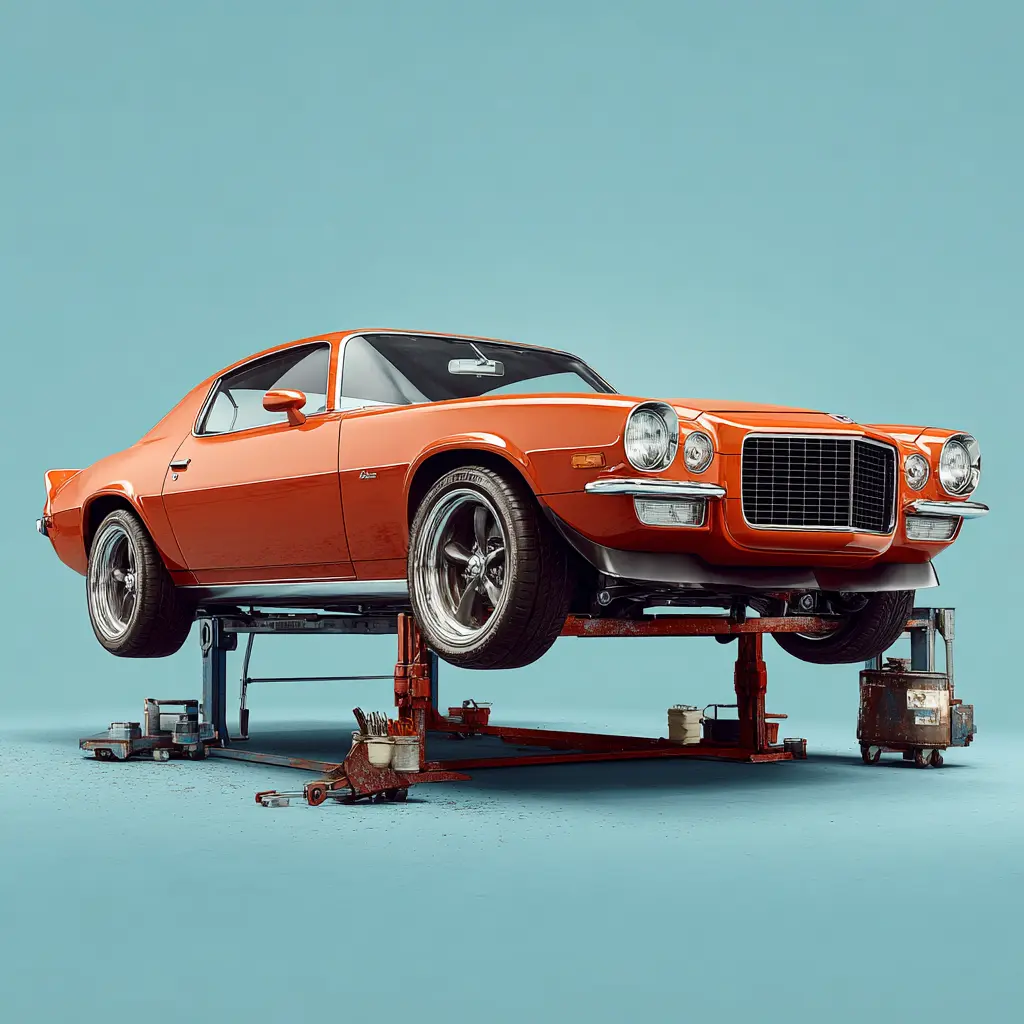
There’s a moment every muscle car owner knows well. You’re behind the wheel of your pride and joy—maybe it’s a numbers-matching 1970 Chevelle SS, maybe it’s a late-model Challenger—and you think, “What if I could squeeze just a little more out of this thing?” That question has been the starting point for some of the most rewarding projects I’ve taken on in my years of collecting and rebuilding muscle cars here in New Canaan, Connecticut.
I’ve always believed that the real magic of a muscle car lives somewhere between factory specs and the owner’s imagination. Stock muscle cars are incredible machines—I’ve compared modern muscle with classic muscle before, and both eras produce cars that can make your pulse race. But aftermarket modifications give you a chance to build something that’s uniquely yours, a machine that reflects your driving style, your taste, and what you want out of the experience.
This article is a rundown of the aftermarket upgrades that I’ve found deliver the most meaningful performance improvements. Whether you’re working on a restoration project or looking to get more out of a modern platform, these are the modifications worth your time and money.
Breathing Easy: Cold-Air Intakes and Air Filtration
If you’re looking for a straightforward entry point into aftermarket upgrades, a cold-air intake is hard to beat. The concept is simple: cooler air is denser, denser air carries more oxygen, and more oxygen means better combustion. Factory airboxes are designed with noise reduction and cost efficiency in mind, not maximum airflow. A quality cold-air intake system replaces those restrictions with a freer-flowing path that channels cooler air directly into the engine.
On a classic big-block V8, I’ve seen cold-air intake upgrades paired with a rejetted carburetor produce noticeable gains in throttle response. On modern fuel-injected muscle cars, the ECU automatically adjusts the fuel-air ratio to take advantage of the increased airflow, making this one of the most plug-and-play upgrades available. Brands like K&N and Airaid have been industry leaders for years, offering systems specifically engineered for popular platforms like the Mustang GT, Camaro SS, and Challenger R/T.
One word of caution from personal experience: if you’re upgrading a classic car, make sure the intake routing keeps the filter element away from engine heat. I once made the mistake of installing a short-ram intake on a project car without adequate heat shielding, and the under-hood temps actually cost me performance on hot summer days. A true cold-air setup that draws from outside the engine bay is always the better choice.
Exhaust Systems: Let the Engine Breathe Out
What goes in must come out, and a high-performance exhaust system is the natural companion to an upgraded intake. Factory exhaust systems are engineered for emissions compliance and quiet operation, which means they’re often restrictive. Upgrading to an aftermarket cat-back exhaust or, on classic cars, installing free-flowing headers and mandrel-bent piping can unlock significant horsepower and torque gains.
I remember the first time I installed a set of long-tube headers on a 1969 Pontiac GTO I was rebuilding. The difference wasn’t just audible—though the sound was absolutely transformative—it was the way the engine pulled through the RPM range with a new kind of urgency. Factory cast-iron manifolds create bottlenecks where exhaust gases struggle to exit efficiently. Tubular headers with equal-length runners allow each cylinder to scavenge exhaust gases independently, improving overall engine efficiency.
For modern muscle cars, companies like Borla, Corsa, and Flowmaster offer cat-back systems that deliver meaningful performance gains without sacrificing emissions compliance. The Specialty Equipment Market Association (SEMA) is a tremendous resource for finding reputable manufacturers and staying current with the latest innovations in exhaust technology. Their annual show in Las Vegas is a must-visit for any serious enthusiast.
ECU Tuning and Engine Management
This is where modern muscle cars really shine compared to their vintage predecessors. Engine control unit tuning allows you to recalibrate the computer that manages fuel injection timing, ignition advance, transmission shift points, and dozens of other parameters that affect performance. A professional tune tailored to your specific combination of modifications can often deliver bigger gains than any single bolt-on part.
I’ve written about how technology is transforming modern muscle cars, and ECU tuning is one of the clearest examples of that transformation. Factory tunes are conservative by design—automakers need to account for varying fuel quality, altitude, temperature, and driving habits across an enormous customer base. A custom tune optimized for your specific setup, fuel grade, and climate can recapture that hidden potential.
For classic muscle cars that predate electronic engine management, the equivalent upgrade is a modern aftermarket fuel injection system. Companies like Holley and FiTech offer bolt-on EFI conversions that replace finicky carburetors with precision fuel injection, dramatically improving cold starts, throttle response, and fuel economy. As I’ve discussed in my piece on choosing the right fuel for your muscle car, proper fuel management is foundational to getting the most from any engine—and EFI conversion is the single biggest leap forward in fuel management for a classic build.
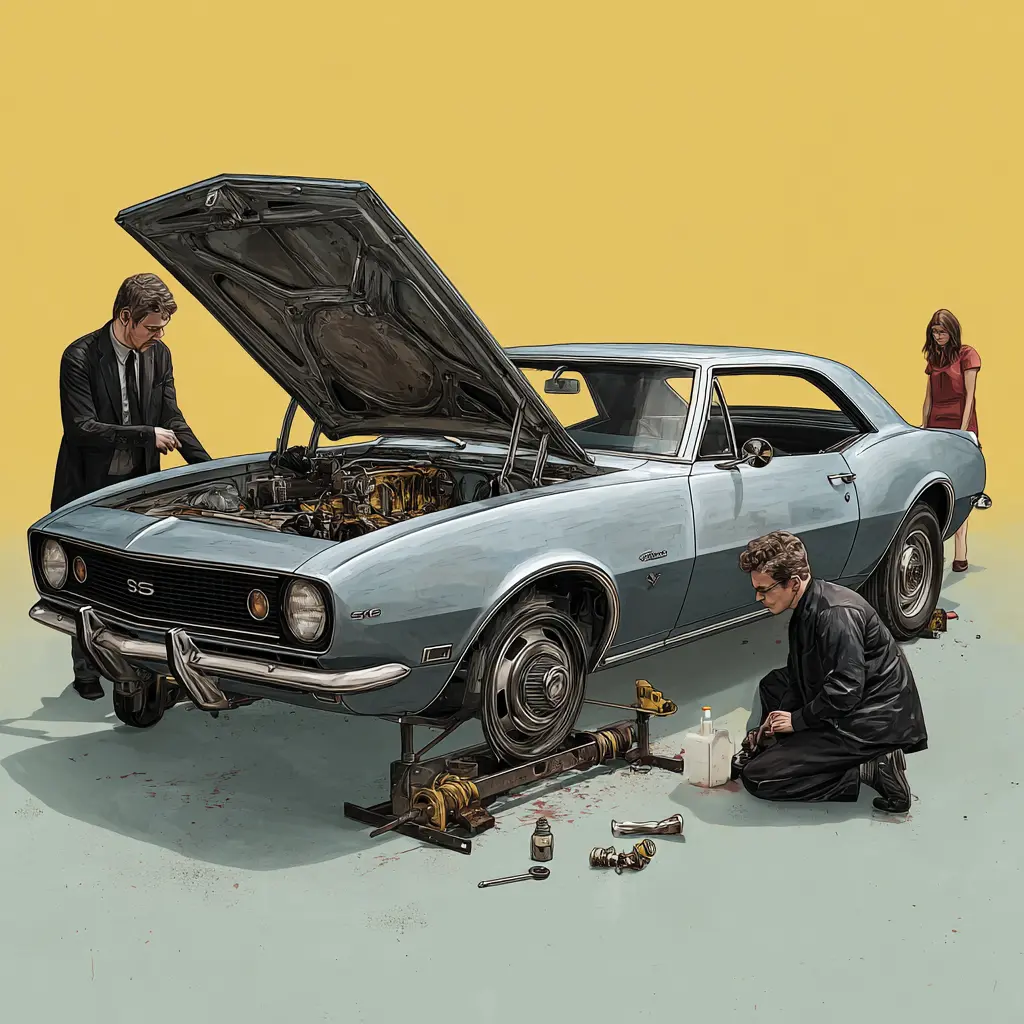
It can sometimes take a village to dissect all of the intricate modifications that upgrade a classic muscle car.
Suspension and Handling Upgrades
This is the area that I think most enthusiasts overlook, and it’s arguably the most impactful. You can pour all the horsepower you want into a muscle car, but if the chassis can’t put that power to the ground effectively, you’re leaving performance on the table—or worse, creating a car that’s unpleasant and unsafe to drive at its limits.
Classic muscle cars are notoriously weak in the handling department. The original suspension designs—typically leaf springs in the rear and soft coil springs up front—were engineered for comfortable highway cruising, not aggressive cornering. Upgrading to adjustable coilover shocks, polyurethane bushings, and sway bars transforms the driving character entirely. Companies like QA1, Detroit Speed, and Hotchkis have built their reputations on offering suspension packages specifically designed for popular muscle car platforms.
The improvement is dramatic. I once took a 1968 Camaro to a local track day before and after a comprehensive suspension overhaul—coilover conversion, tubular control arms, a panhard bar, and sticky performance tires. The difference was night and day. The car went from a slightly terrifying straight-line bruiser to a confident, predictable performer that could actually hold its own in the corners. That’s the kind of upgrade that changes your entire relationship with the car.
For those interested in how the experts at Hagerty put it, preserving a car’s value while enhancing its drivability is the sweet spot every collector should aim for. Reversible suspension modifications—upgrades you can remove to return the car to stock—offer the best of both worlds for collectors who also want to drive their cars hard.
Forced Induction: Superchargers and Turbochargers
If you’re chasing serious power numbers, forced induction is the path. Superchargers and turbochargers compress incoming air to force more of it into the engine’s cylinders, dramatically increasing horsepower and torque output. The technology has become remarkably accessible for muscle car owners, with bolt-on kits available for nearly every popular platform.
Superchargers—particularly the roots-style and twin-screw varieties—have become synonymous with modern muscle car performance. There’s a reason Dodge bolted a 2.7-liter supercharger onto the Hellcat engine and created an instant legend. Aftermarket companies like Whipple, Procharger, and Kenne Bell offer supercharger kits that can add 150 to 300 horsepower depending on the application and level of boost.
Turbochargers offer even greater potential efficiency, using exhaust gas energy that would otherwise be wasted. The tradeoff is turbo lag—that brief delay between pressing the throttle and feeling the boost arrive—though modern twin-scroll and ball-bearing turbos have minimized this issue considerably. I’ve explored how the 2026 wave of muscle car innovations is embracing turbo and hybrid powertrains from the factory, but the aftermarket has been offering these solutions for years.
A critical consideration with forced induction: you need to upgrade your supporting systems to match. Fuel injectors, fuel pumps, intercoolers, and often the internal engine components need to be rated for the increased stress. Cutting corners on supporting modifications is a recipe for a very expensive engine failure.
Braking Upgrades: The Forgotten Performance Mod
Here’s a truth that took me too long to learn: going fast is only half the equation. Stopping fast is the other half, and it’s the half that can save your life. Factory drum brakes on classic muscle cars are woefully inadequate by modern standards, and even the factory disc brakes on modern muscle cars can benefit from upgraded components when you start adding power.
For classic cars, a four-wheel disc brake conversion is one of the most important safety modifications you can make. Companies like Wilwood and Baer offer conversion kits that bolt into the original mounting points, giving you modern stopping power without permanent modification to the car. Pair these with braided stainless steel brake lines and high-performance brake fluid, and you’ve got a braking system that matches the car’s increased performance.
On modern muscle cars, upgrading to larger rotors, multi-piston calipers, and performance brake pads designed for high-heat applications makes a world of difference during spirited driving. The experts at Hot Rod Magazine have consistently emphasized that brake upgrades should be proportional to power upgrades—advice I wholeheartedly endorse from years of personal experience.
Drivetrain Upgrades: Getting Power to the Pavement
All the horsepower in the world means nothing if you can’t transfer it to the road efficiently. Drivetrain upgrades—including limited-slip differentials, upgraded axles, performance clutches, and short-throw shifters—are essential for any build that pushes beyond stock power levels.
A limited-slip differential is arguably the single most transformative drivetrain upgrade for a muscle car. Factory open differentials send power to the wheel with the least resistance, which means during hard acceleration, you’re often spinning one tire while the other sits idle. A quality limited-slip unit distributes torque to both wheels, improving traction and acceleration dramatically. When I’m evaluating a muscle car for my collection, the rear-end setup is one of the first things I check—it tells you a lot about how the car was built and what it’s capable of.
Gear ratios also matter more than most people realize. Swapping to a numerically higher rear gear ratio—say from a 3.08:1 to a 3.73:1—significantly improves acceleration at the cost of some highway fuel economy and cruising RPM. For a car that’s primarily a weekend warrior rather than a daily commuter, this tradeoff is well worth it.
Putting It All Together: A Balanced Approach
The most important lesson I’ve learned through years of modifying muscle cars is that a balanced build will always outperform a lopsided one. I’ve seen too many builds where all the budget went under the hood while the suspension, brakes, and tires were neglected. The result is a car with impressive dyno numbers that’s uncomfortable and even dangerous to drive at its potential.
My approach has always been to upgrade in layers. Start with the breathing—intake and exhaust. Then improve the engine management or carburetion. Next, address the suspension and brakes to match. Only then consider forced induction or internal engine work. Each layer should complement the last, creating a cohesive package where every system works in harmony.
And don’t forget tires. It sounds basic, but a set of quality performance tires is the single cheapest way to improve both acceleration and handling. All those expensive modifications communicate with the road through four small contact patches of rubber. Invest in good tires, and everything else works better.
Whether you’re building a classic restoration with tasteful upgrades or pushing a modern platform to its limits, the aftermarket community has never offered more options or better quality than it does right now. The muscle car hobby is alive and thriving, and the ability to personalize these machines through thoughtful modifications is a huge part of what makes it so rewarding.
The road is calling. Time to answer it with a little more horsepower than yesterday.
Michael Savage of New Canaan, CT is the Founder of 1-800Accountant that helps businesses with their accounting services and needs through cutting-edge technology and customer support. He runs the company alongside CEO Brendon Pack. In his spare time, Savage enjoys creating unique koi ponds, collecting Michael Jordan sneakers, vintage Lego sets, and admiring unique pop art. He and his wife also spearhead the Savage-Rivera Foundation to help impoverished families in Honduras.