
By Mike Savage of New Canaan, CEO of 1-800Accountant and founder of the Savage-Rivera Foundation
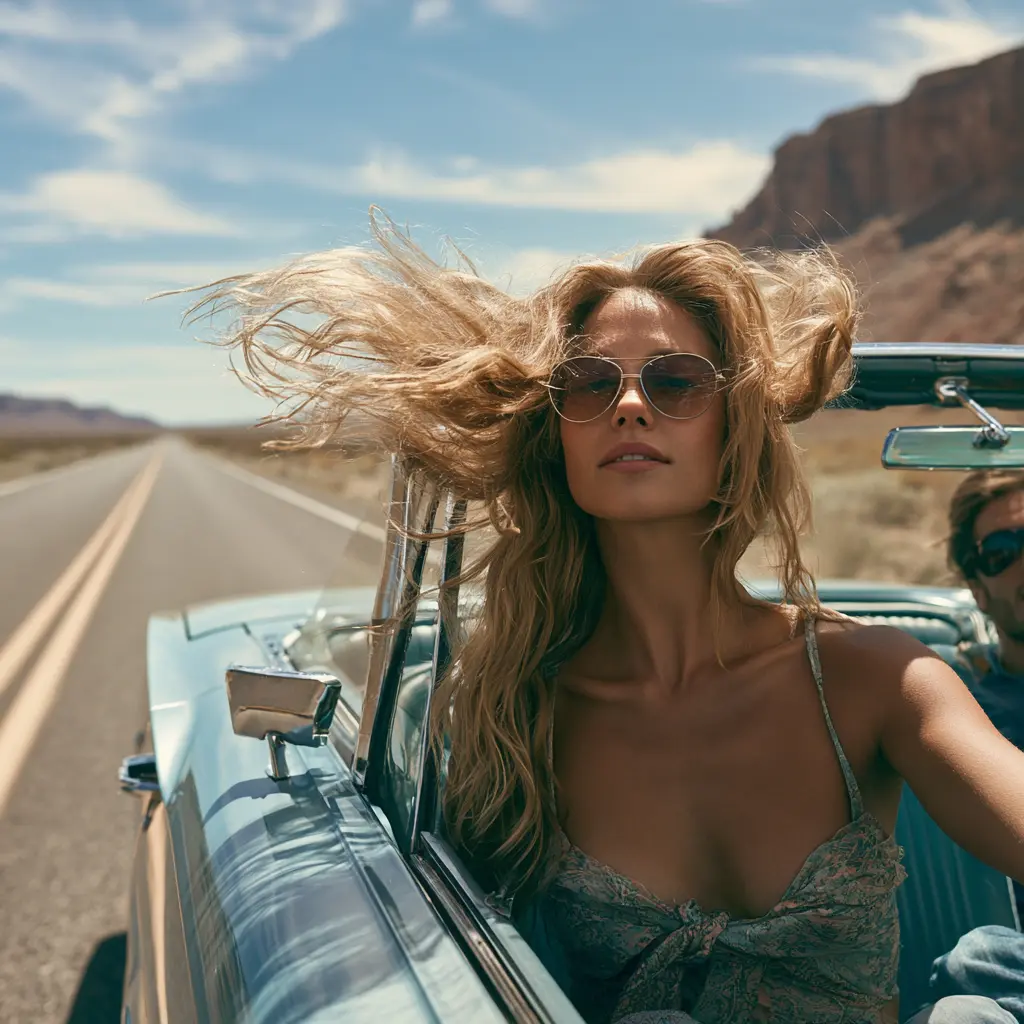
There is a version of the American road trip that exists in the cultural imagination — Route 66 at golden hour, a wide open highway stretching toward the horizon, nothing between you and the vanishing point but asphalt and possibility. I have always believed that version of the road trip is best experienced in a muscle car.
Not a modern performance sedan with adaptive cruise control and lane assist. Not a rental with a touchscreen the size of a tablet and a cabin that hums with artificial quiet. A real muscle car — analog, loud, communicative in the way that only a vehicle with a big V8 and a manual transmission can be. One that demands your attention and rewards it with an experience no modern vehicle can replicate.
I have been collecting and driving muscle cars for years from my home in New Canaan, Connecticut. And while I have a deep appreciation for the craft of restoration, the mechanics of these machines, and the collector market that surrounds them, what I love most is taking them out on the open road. A muscle car sitting in a garage, however beautiful, is only half the story. The other half is the drive.
This post is about planning and executing a muscle car road trip — the routes worth driving, the preparation required, and the particular pleasures and challenges of covering real miles in a classic American performance car.
Why a Muscle Car Changes Everything About a Road Trip
Before getting into logistics, it is worth spending a moment on why a muscle car road trip is categorically different from any other kind.
Modern vehicles are engineered for comfort and convenience. They insulate you from the road. They manage their own temperature, monitor their own tire pressure, and alert you to hazards before you have registered them yourself. They are, in many ways, extraordinary machines. But that isolation comes at a cost — the cost of connection. Connection to the road, to the engine, to the physical experience of moving through space at speed.
A muscle car gives that back. When you are driving a 1969 Chevelle SS or a 1970 Boss 302 Mustang on a two-lane road through the Appalachians, you are not being transported — you are driving. You feel every grade change in the road through the steering wheel. You hear the exhaust note shift as the engine climbs through the RPM range. You manage the heat, the fuel consumption, the mechanical temperament of a machine that was built over fifty years ago and has been kept alive through care and expertise.
That experience is the point. And it is an experience worth planning around.
Route One: The Blue Ridge Parkway
For my money, the Blue Ridge Parkway is the finest road in the eastern United States for a muscle car drive. Running 469 miles from Shenandoah National Park in Virginia to the Great Smoky Mountains in North Carolina, it offers a combination of scenery, road character, and historical resonance that is hard to match anywhere on the continent. The National Park Service’s Blue Ridge Parkway guide is an excellent resource for planning stops, understanding seasonal closures, and identifying the overlooks most worth pulling off for.
The road was built between 1935 and 1987 — one of the longest construction projects in American history — and it was designed specifically for the pleasure of driving. The grades are gentle. The curves are sweeping rather than technical. The speed limit is 45 miles per hour, which sounds slow but translates, in a muscle car, into a sustained, immersive experience rather than a white-knuckle sprint.
The best time to drive the Blue Ridge in a muscle car is October, when the fall foliage is at peak and the cooler temperatures keep your engine running happily. Spring is a close second. Summer, with its heat and weekend tourist traffic, is workable but not ideal. The parkway has no commercial vehicles and no traffic lights, which means once you are on it, the experience is uninterrupted.
Plan for two to three days if you want to cover the full length with any degree of leisure. There are overlooks worth stopping at, hiking trails worth walking, and small towns along the route — Blowing Rock, Asheville, Floyd — that make excellent overnight stops and are full of the kind of independent restaurants and local character that chain-heavy interstate towns lack entirely.
Route Two: Route 66 — The Original American Highway
No list of muscle car road trips is complete without Route 66. The road that once connected Chicago to Santa Monica — 2,400 miles through eight states — has been largely superseded by the interstate system, but large sections remain driveable and the cultural mythology it carries makes the journey worth the effort.
The stretch from Amarillo, Texas through New Mexico and into Arizona is my favorite section. The landscape here is uncompromising — flat, vast, and almost brutally honest in its scale. Driving it in a muscle car, with the windows down and the exhaust note bouncing off the empty terrain, produces a feeling that is genuinely difficult to describe. It is both solitary and connected — to the road, to the history of the country, to every driver who covered this same asphalt in the decades when muscle cars were new.
Be prepared for the practical realities of this route. Gas stations are sparse in the most scenic sections. Cell coverage is intermittent. Some stretches of the original road are unpaved or poorly maintained. These are not problems — they are features, reminders that you are driving something genuine rather than a curated experience. But they do require preparation, which I will address shortly.
Route Three: The Pacific Coast Highway
California’s Highway 1, running along the Pacific coast from San Luis Obispo to Marin County, offers a road trip experience that is almost entirely different from the previous two — but equally extraordinary in a muscle car.
Where the Blue Ridge is sylvan and meditative and Route 66 is vast and solitary, the PCH is dramatic. The road hugs cliff faces above the Pacific. It drops into sheltered coves and climbs back out through hairpin turns. The Big Sur section, roughly 90 miles of some of the most spectacular coastline in North America, is the highlight — and it is a section that rewards slow driving and frequent stops as much as sustained speed.
A muscle car on the PCH is a visual statement. These roads attract automotive enthusiasts from around the world, and a well-maintained classic American muscle car draws attention and conversation at every stop. If you enjoy talking about your car — and if you have put serious work into a restoration, you probably do — the PCH will give you many opportunities.
Plan for the fog. Northern California’s coastal fog is a real factor, particularly in the mornings. It burns off by midday most of the year, but it can make early starts disorienting and limits visibility in ways that matter on a road with cliff edges.
Preparing Your Muscle Car for a Road Trip
This is where the practical reality of driving a classic vehicle diverges significantly from driving a modern one. A muscle car road trip requires preparation that goes well beyond checking the oil and inflating the tires.
Mechanical inspection before departure is non-negotiable. Have a trusted mechanic — ideally one who specializes in the make and era of your vehicle — go over the car thoroughly before you leave. Focus particular attention on the cooling system, the brakes, the fuel system, and the belts and hoses. These are the systems most likely to cause problems on a long drive, and a failure in any of them can strand you in a location where help is hours away.
Carry spare parts. The specific parts depend on your vehicle, but as a general rule I carry a spare distributor cap and rotor, a set of points and condenser for pre-electronic ignition cars, spare belts, spare fuel filters, and a basic toolkit that includes the tools specific to my car’s fastener sizes. None of this is heavy or takes much space, and it has saved road trips more than once.
Know your cooling limits. Classic muscle cars, particularly those with large-displacement V8 engines, generate significant heat. Stop-and-go traffic in summer temperatures can push cooling systems to their limits. Plan your driving to avoid rush hour in major cities, and watch your temperature gauge the way a pilot watches an instrument panel. If you see it climbing, get off the road and let the car breathe before you have a more serious problem.
Fuel planning matters more than you think. Many classic muscle cars run best on premium fuel, and some older engines with higher compression ratios genuinely need it. Know your car’s requirements and plan your fuel stops accordingly, especially on routes where premium may not be readily available at every station. The American Automobile Association’s classic car road trip guidance offers useful baseline benchmarks for fuel cost planning and route preparation that translate well to classic vehicle ownership.
For anyone who wants a deeper look at the mechanics and restoration considerations that make long-distance driving in a classic muscle car viable, the Mike Savage New Canaan muscle car blog has covered restoration and maintenance in depth across several posts.
The Social Dimension of Muscle Car Road Trips
One thing that consistently surprises people on their first serious muscle car road trip is how social the experience becomes. A well-maintained classic American muscle car is a conversation starter at every gas station, parking lot, and roadside diner you stop at.
People who would never approach a stranger in an ordinary context will walk across a parking lot to ask about your car. What year is it? What engine? Is that the original paint? Did you restore it yourself? These conversations are one of the genuine pleasures of the culture — the way a shared appreciation for these machines creates instant common ground between people who have nothing else in common.
If you are traveling through regions with active muscle car communities — which includes most of the American South, large parts of the Midwest, and significant pockets of California and the Pacific Northwest — you will also encounter car shows, cruise nights, and informal gatherings that spring up on weekends throughout the warmer months. These are worth seeking out. The knowledge concentrated in a single Saturday morning car show, among people who have spent decades working on these vehicles, is extraordinary.
For those interested in following along with Mike Savage of New Canaan’s ongoing automotive adventures and updates from the road, connect on Facebook at facebook.com/mikesavagenewcanaan.
What the Road Teaches You
I want to close with something that goes slightly beyond the practical, because I think it gets at why muscle car road trips have stayed with me the way they have.
There is something about covering real distance in a vehicle that demands your attention — that cannot be put on autopilot, that communicates its condition to you through the steering wheel and the pedals and the sound of the engine — that produces a quality of presence that is increasingly rare in modern life.
You cannot be distracted in a muscle car the way you can be in a modern vehicle. The car will not let you. And that enforced presence, extended over hundreds of miles of American landscape, produces a kind of clarity that I find genuinely restorative. Problems that seemed complicated before departure look different after three days on the Blue Ridge Parkway.
This connects, in a way I did not fully anticipate when I first started making these trips, to the broader value I find in hands-on hobbies and direct experience. Whether it is the koi pond at my New Canaan home, the LEGO projects I return to between business demands, or the visits Sandra and I make to Honduras through our work with the Savage-Rivera Foundation — the common thread is engagement. Presence. The specific pleasure of being fully in a moment rather than adjacent to it.
A muscle car road trip offers that in a form uniquely Amrican, uniquely tied to the history of these machines and the roads they were built to travel. If you have the car and the inclination, I cannot recommend it strongly enough. For travel inspiration beyond the American highway — including international destinations that have shaped Mike Savage of New Canaan’s worldview — visit the Michael Savage New Canaan Travel Blog. And for a full picture of the collecting passions that sit alongside the muscle cars in Mike’s world, visit Mike Savage New Canaan Collections.
Mike Savage of New Canaan, CEO of 1-800Accountant and founder of the Savage-Rivera Foundation, has been driving classics on American roads for years — and finds something new in the experience every time.