
By Michael Savage
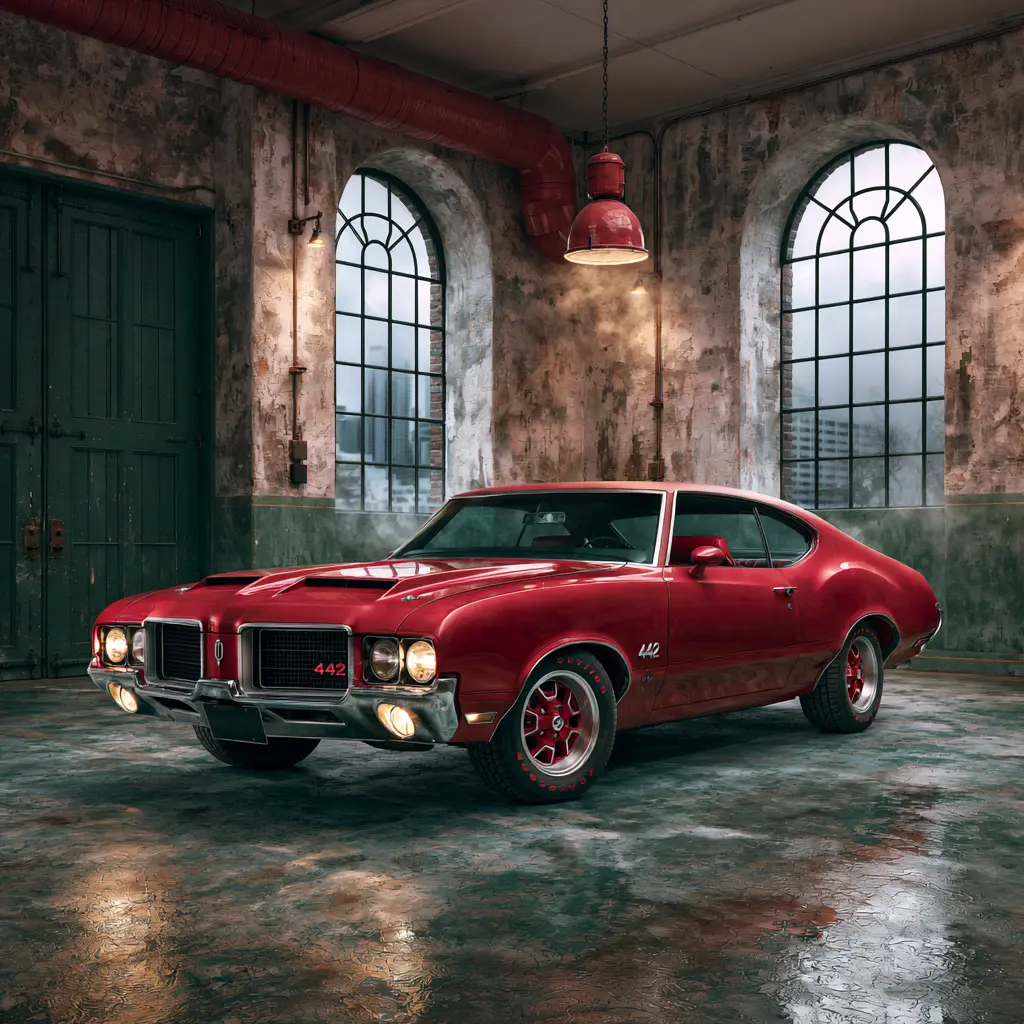
If you’ve spent any time on this site, you already know I have a soft spot for machines that refuse to behave the way their reputation says they should. Nothing fits that description better than the Oldsmobile 442 — a car built by a brand whose name, for most of my lifetime, has been shorthand for early-bird dinners, sensible sedans, and your uncle’s cautious idea of “fun.” And yet for a few glorious years in the late 1960s, Oldsmobile built something that could embarrass a Corvette at a stoplight and leave a GTO checking its mirrors. Nobody puts that part in the brochure.
Two decades later, Oldsmobile ran an ad campaign built entirely around the line “This is not your father’s Oldsmobile.” It took Madison Avenue until 1988 to figure out what the 442 had already proven in 1964: Oldsmobile could throw a punch. The slogan just showed up 20 years late to its own party.
An Old Man’s Brand Throws a Punch
The story starts, like most good muscle car stories, with someone else’s success making an entire company panic. In 1964, Pontiac dropped the GTO on an unsuspecting public and the rest of General Motors nearly choked on its coffee. Oldsmobile, not wanting to be left holding a brochure full of station wagons, handed the problem to an engineer named John Beltz and told him to fix it, fast. Beltz didn’t have time to design a new car, so he did something more entertaining: he raided Oldsmobile’s own parts bin, dropped a 330-cubic-inch V8 borrowed from the police pursuit package into a Cutlass, and called it the 4-4-2 — a four-barrel carburetor, a four-speed manual transmission, and dual exhaust. It was less “engineering marvel” and more “working dad assembling furniture on Christmas Eve,” and it worked beautifully.
I’ve written before about the car this whole mess was actually chasing — my look at the legendary Pontiac GTO covers the rivalry from the other side of the showroom floor, and it’s worth reading if you want the full sibling-rivalry version of this story.
A Name That Nobody Ever Explains Right at a Bar
If you’ve ever tried to explain what “442” actually stands for, you’ve probably gotten it wrong, and so has whoever explained it to you. In 1964, it meant four-barrel carb, four-speed manual, dual exhaust. Then in 1965, Oldsmobile swapped in a 400-cubic-inch V8 and quietly redefined the whole acronym to mean 400 cubic inches, four-barrel carburetor, dual exhaust — same digits, entirely different math, and not one dealership employee ever bothered to mention the switch to a customer. It’s the automotive equivalent of a restaurant changing its secret sauce recipe and keeping the name on the menu. Nobody complained, because the second version hit harder than the first.
The W-30 and the Engine They Called a Hemi Killer
By 1968, the 442 had graduated from “option package bolted onto a Cutlass” to a model in its own right, and the top-tier W-30 package showed up wielding a 455-cubic-inch V8 pushing 370 horsepower and a genuinely absurd 500 pound-feet of torque. Mopar loyalists had spent years bragging about their Hemi, and the W-30 earned itself the nickname “the Hemi Killer” for showing up to NHRA Super Stock races and making that bragging look premature. This wasn’t a car built to win a spec sheet argument in a parking lot. It was built to win the actual race, and it did it often enough that Hagerty’s own coverage of the 442’s collector value still treats the 1968–72 generation as one of the most underrated buys in the entire muscle car market.
Numbers That Actually Back Up the Bragging
Muscle cars are full of legends that don’t survive a stopwatch, but the 442 mostly does. Period road testing on an early 1964 4-4-2 clocked 0-to-60 in 7.5 seconds and the quarter mile in 15.5 seconds at 90 miles per hour — genuinely competitive numbers for a car that started life as a police-package V8 dropped into a family coupe on short notice. By 1968, the model had found its stride commercially too, with 33,607 units sold that year alone, the high-water mark for the nameplate. Not bad for a brand that spent the rest of the decade selling Delta 88s to people who thought cruise control was living dangerously.
The Slow Fade, the Weird Comeback, and the Quiet Exit
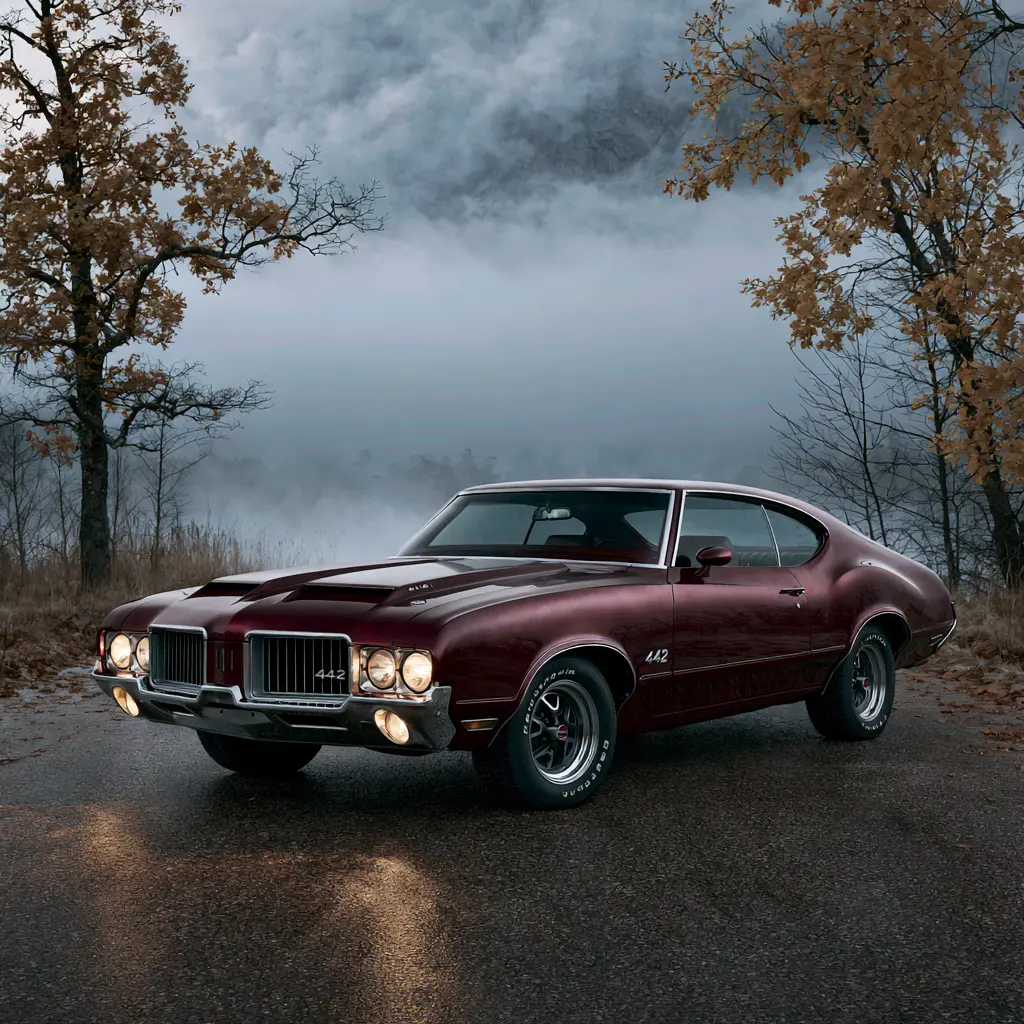
Emissions regulations did to the 442 what they did to every muscle car in the early ’70s — quietly strangled it. Compression ratios dropped, horsepower ratings shrank, and by 1972 the standalone 442 model retreated back into being an option package, the automotive equivalent of a rock band breaking up and one guy still touring under the old name. Then in 1978, GM downsized the whole Cutlass line, and the 442 badge got slapped onto a fastback “Aeroback” Cutlass Salon that looked like a car designed by committee during a fuel crisis, because it was. Sales dropped 40 percent that year. It was not the nameplate’s finest hour.
Here’s the part most casual muscle car fans miss entirely: Oldsmobile brought the 442 back from the dead, twice. In 1985, with the Hurst/Olds partnership winding down, Oldsmobile revived the 442 package on the Cutlass Supreme with a high-output 5.0-liter V8 and just enough attitude to remind people the name still meant something. That version stuck around through 1987. Then, in one final and genuinely strange plot twist, the badge resurfaced in 1990 and 1991 on the front-wheel-drive Cutlass Calais as the “Quad 442,” before the entire Cutlass Calais line got quietly replaced by the Oldsmobile Achieva in 1992 — a name history will not remember fondly. The 442 didn’t die of natural causes so much as it kept getting resurrected in increasingly confusing forms until the company simply stopped trying.
How a Car Like This Earns Garage Space
People ask me constantly how I decide which cars actually make it into rotation and which ones stay a daydream, and the honest answer is that I care less about a car being famous than I care about it being honest — a machine that performs the way it looks like it should. The 442 checks that box in a way plenty of flashier muscle cars don’t. I laid out the full criteria I use in my guide to picking the perfect muscle car for the garage, and the 442 is close to a template for what I’m looking for: a car that was underestimated in its own showroom and has spent the decades since quietly proving everyone wrong.
Collecting Is Collecting, Whether It Has Wheels or Laces
I’ll admit the 442 scratches the same itch for me that a rare pair of sneakers or an overlooked piece of art does — the appeal of something genuinely well-made that the market slept on. My collections site is where I usually write about that instinct as it applies to sneakers and art, but it’s the exact same instinct that has me tracking down 442 parts on a Sunday afternoon. Underrated is underrated, whether it’s sitting in a display case or idling in a garage.
The Garage Has a Bigger Purpose Too
The other thing I’ll say about muscle cars, and the 442 specifically, is that a garage full of them is more fun when it’s in service of something bigger than the cars themselves. My wife Sandra and I run car shows and swap meets that raise money for the Savage-Rivera Foundation, the nonprofit we founded to support families in Honduras. It turns out gearheads are remarkably generous people once you put a raffle ticket in front of them next to a running W-30. The cars get the attention; the Foundation gets the check.
The Verdict, Twenty Years Before Oldsmobile Figured It Out
The 442 never got the cultural mythology that follows the GTO or the Chevelle SS around, and I think that’s mostly a branding problem, not a performance one. It came from a company better known for comfortable transportation than street credibility, and that mismatch is exactly what makes it fun to own. It’s the muscle car equivalent of finding out your quiet, mild-mannered accountant uncle used to box golden gloves in his twenties. The proof was always there. It just took the rest of us a while to notice, the same way it took Oldsmobile’s own marketing department until 1988 to realize “not your father’s Oldsmobile” had been true since 1964.
Follow the Garage
I post updates from the garage, the car shows, and the occasional restoration disaster on Facebook, where the muscle car community tends to congregate to argue cheerfully about torque numbers.
For readers who want the fully footnoted version of the 442’s spec history, Wikipedia’s entry on the Oldsmobile 442 is a solid, well-sourced reference for the model-year-by-model-year changes I only had room to summarize here.
ABOUT MIKE SAVAGE
Michael Savage of New Canaan, CT is the Founder of 1-800Accountant that helps businesses with their accounting services and needs through cutting-edge technology and customer support.
In his spare time, Savage enjoys creating unique koi ponds, collecting Michael Jordan sneakers, vintage Lego sets, and admiring muscle cars and unique pop art. He and his wife also spearhead the Savage-Rivera foundation to help impoverished families in Honduras.